


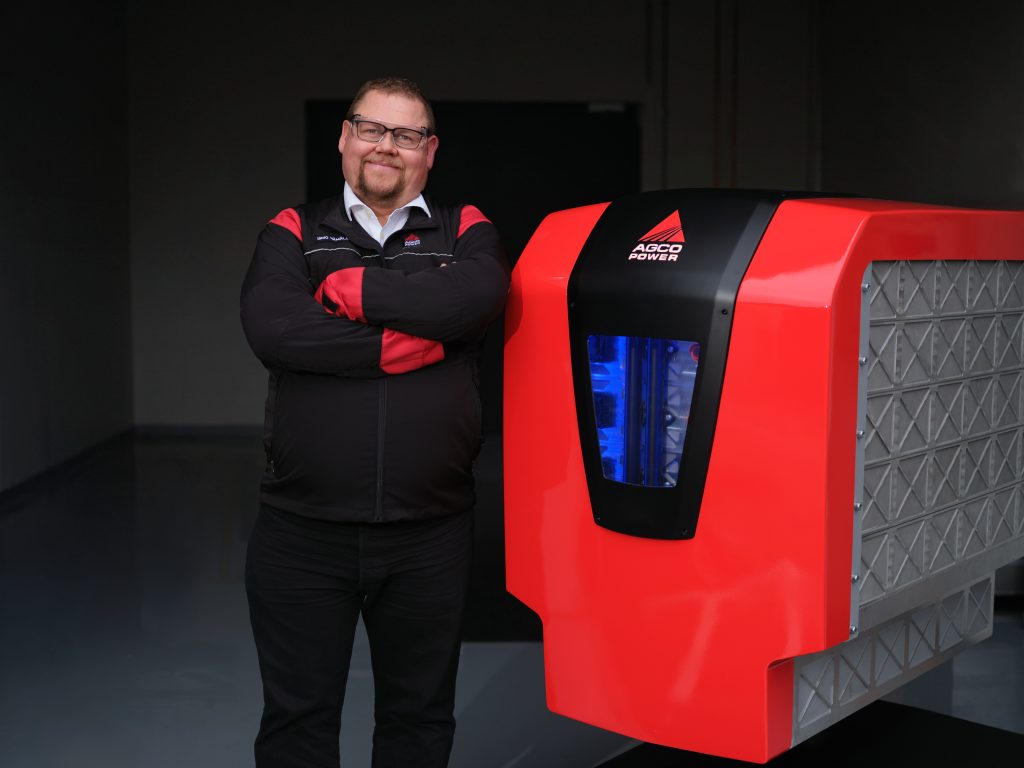
Most farmers and contractors fuel their tractors equipped with AGCO Power CORE engines with conventional fossil diesel. However, the new engine platform was designed from the outset to also accommodate new fuels. Within AGCO Power’s factory area, the company’s internal logistics already operate on diesel produced from renewable raw materials.
“Future fuels for engines remain a topical subject of discussion. The CORE engines were designed from a clean sheet, taking into account all possible fuel options,” says Ismo Hämäläinen, who is responsible for the development of alternative-fuel power solutions at AGCO Power.
Drop-in Fuels Can Already Be Used Directly in Tractors
According to Hämäläinen, the easiest options for end users are so-called drop-in fuels, which can be used directly in CORE engines.
“With these fuels, the engine runs perfectly and emission requirements are met. In our own tests, certain emission components have even decreased significantly,” Hämäläinen explains.
The new CORE engine series was developed because, for heavy-duty applications—especially machines used in agriculture and forestry—there is currently no good alternative power solution available to meet their high energy demands.
Thanks to significantly improved fuel efficiency compared to previous diesel engines, the new engines will remain relevant well into the future. In particular, CORE engines are designed to be adaptable to various fuels over time, including:
- HVO diesel produced from renewable raw materials through hydrogenation – already available today
- Synthetic diesel produced from hydrogen generated with renewable electricity and captured carbon dioxide
- Ethanol and methanol
- Biogas
- Hydrogen
At AGCO Power’s Linnavuori plant, tractors and trucks in operation already use renewable HVO diesel (Hydrotreated Vegetable Oil). As the name suggests, it is produced by hydrogenating waste- and residue-based fats and oils. Suitable raw materials include used cooking oils from restaurants, fat residues from the food industry, vegetable oils, and by-products from their processing. Because the chemical composition of HVO diesel closely resembles that of fossil diesel, it can be readily used in diesel engines.

E-Fuels Are Technically Sound but Expensive
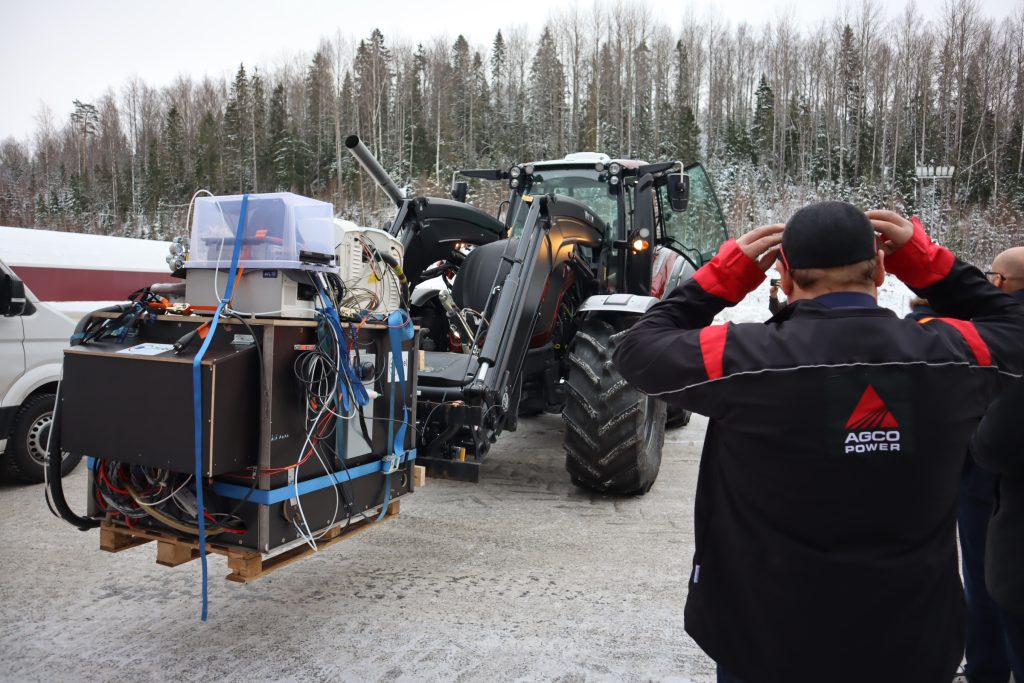
Another viable drop-in fuel option is synthetic diesel, also known as an e-fuel, which has also been tested in Valtra tractors equipped with AGCO Power engines. The fuel is produced from carbon dioxide captured from industrial emissions and hydrogen produced using renewable electricity.
“However, calculations carried out together with VTT and the energy company Neste have shown that synthetic diesel would currently be clearly more expensive than HVO,” Hämäläinen notes.
Biogas is an interesting option as a vehicle fuel, particularly on livestock farms, and AGCO Power is also familiar with this alternative. According to Hämäläinen, however, it would make more sense to use biogas on farms for electricity and heat generation rather than as tractor fuel.
“There are two main challenges with using biogas as a fuel. First, the energy content available on board the vehicle remains low, which severely limits operating range. Second, due to the carbon dioxide content of raw biogas, engine performance is lower than with purified gas, so it must be cleaned. In vehicle use, biogas purity requirements are high, and purification consumes a lot of energy,” Hämäläinen explains.
Hydrogen delivers near-diesel efficiency
Ethanol is widely used as a bio-component in gasoline, but along with methanol it can also be used as pure engine fuel. Hydrogen, in turn, can be used both to generate electricity via a fuel cell and directly in an internal combustion engine.
“We are experimenting with hydrogen together with Fendt in a joint fuel-cell project at two test farms in northern Germany, and we have also studied its use as a fuel in diesel engines. It achieves an efficiency close to that of diesel,” says Hämäläinen.
The practical challenge is volumetric energy density: it is difficult to fit enough hydrogen into a tractor to support extended work cycles. For example, to match the energy content of a 200-liter diesel tank, around 2,500 liters of hydrogen compressed to 350 bar—a typical pressure for heavy-duty applications—would be required. Even with 700-bar tanks used in passenger cars, the required volume would still be around 1,200–1,500 liters.
The engine factory’s R&D portfolio also includes hybrid and fully electric solutions. Combining a diesel engine with an electric motor provides additional power when needed, while fully electric powertrains will first be used in applications where zero emissions are beneficial and where charging during the workday is feasible.
- Electric tractors on farmer’s terms – AGCO Power develops powertrains for real-world agriculture
“However, hybrid or electric powertrains are not universal solutions for all agricultural machinery. The required solution depends on the type of work being performed. Additional benefits can be achieved by electrifying auxiliary systems and implements. There have even been requests for tractors to include a power outlet so that equipment such as welding units could be used at the edge of the field,” Hämäläinen says.
Reliability Comes First in Work Machine Engines
The engine manufacturer’s fuel portfolio thus includes numerous options, and new ones continue to be explored. Ismo Hämäläinen emphasizes that for manufacturers of work-machine engines, reliability is the most critical product attribute. On farms, many tasks must be performed when weather conditions allow, and during peak seasons, maintenance work must not interrupt operations.
“Our new solutions must improve engine efficiency, but above all they must be reliable and economically viable. That is why new innovations, such as new fuels, are first tested virtually through simulation and then in the laboratory. If the anticipated benefits are still realized at reasonable cost, testing continues in prototype vehicles. We do not deliver unfinished products to customers,” Hämäläinen promises.